

Choosing the right lunch container feels straightforward until you’re standing in a store aisle weighing glass against stainless steel, wondering whether the compartments are deep enough for a growing child’s appetite. The types of reusable lunch containers available today span a wide range of materials, sizes, and designs, each carrying its own set of trade-offs between durability, safety, and environmental impact. For parents and eco-conscious individuals alike, this choice touches on health, convenience, and a genuine commitment to reducing waste. This guide walks you through every major option, with honest comparisons and practical guidance for making a choice that fits your life.
Table of Contents
- Key takeaways
- 1. Understanding the types of reusable lunch containers
- 2. Key criteria for choosing reusable lunch containers
- 3. Plastic reusable lunch containers
- 4. Glass lunch containers
- 5. Stainless steel and silicone containers
- 6. Comparing types of reusable lunch containers
- 7. Bento box options: a category worth understanding separately
- 8. Tips for choosing the best reusable lunch container for your family
- My perspective on choosing reusable lunch containers
- Simplify your lifestyle with the right essentials
- FAQ
Key takeaways
| Point | Details |
|---|---|
| Material shapes everything | Your container’s material determines safety, weight, durability, and how well it handles reheating or acidic foods. |
| Plastic dominates but glass is growing | Plastic accounts for 65 to 75% of the market, but glass and stainless steel are gaining ground for health and eco reasons. |
| Insulation is not optional | Pairing containers with insulated lunch bags and ice packs protects food safety, especially for school lunches. |
| Stainless steel outlasts plastic | Premium stainless steel systems carry up to five-year warranties, while plastic containers typically need replacing within one to two years. |
| Match container to meal type | Wet foods, dry snacks, and reheatable meals each call for different container features, so no single type fits every situation. |
1. Understanding the types of reusable lunch containers
Before settling on any single container, it helps to understand the full picture of what is available. The market today organizes largely around four core materials: plastic, glass, stainless steel, and silicone. Each material carries a distinct personality, with its own strengths in portability, safety, and longevity.
Beyond material, containers also vary by format. You have single-compartment boxes for simple meals, divided bento-style trays for variety, stackable sets for meal prep, and collapsible silicone options for minimal storage. Understanding these categories together gives you a layered framework for choosing wisely rather than just grabbing whatever looks appealing on a shelf.
2. Key criteria for choosing reusable lunch containers
Selecting a container that genuinely serves your family requires weighing several factors at once. Here is what matters most:
- Material safety: Look for BPA-free labeling on plastics, and favor glass or stainless steel for acidic foods like tomatoes and citrus, which can interact with certain plastics over time.
- Capacity and compartments: Divided containers support portion control and meal variety without foods mixing. This matters especially for children who dislike foods touching.
- Leak-proof seals: Silicone gaskets and locking lids reduce spills, though true leak-proofing varies widely between brands and styles.
- Appliance compatibility: Confirm whether the container is microwave, freezer, and dishwasher safe before buying. Not all materials handle all three.
- Portability: Weight and size affect whether a container fits comfortably in a school bag or work tote without adding unnecessary bulk.
- Ease of cleaning: Smooth interiors without deep crevices clean more thoroughly, reducing bacterial buildup over time.
Pro Tip: Always check whether a container’s lid and body are rated separately for appliance use. Many glass containers have microwave-safe bodies but plastic lids that must be removed before reheating.
Sustainability also plays a role here. Regulatory pressure, including the EU Single-Use Plastics Directive, is accelerating the shift toward durable, reusable options globally. Choosing a container built to last five or more years carries far more environmental value than replacing a cheap plastic set every season.
3. Plastic reusable lunch containers
Plastic remains the most widely used material in lunch containers, and for understandable reasons. It is lightweight, affordable, and available in an enormous range of shapes and sizes. Polypropylene and Tritan are the two most common food-safe plastics, both offering reasonable durability without the brittleness of older plastic types.
The key distinction for health-conscious buyers is BPA-free certification. Most reputable brands now meet this standard, but it is worth verifying, particularly for containers used to store warm foods or acidic items. High-quality BPA-free plastics last longer than generic versions but still require careful handling to avoid warping and bacteria buildup.
Common plastic container styles include:
- Single-compartment boxes: Simple, affordable, and easy to clean. Best for sandwiches, wraps, or single-dish meals.
- Divided containers: Multiple sections keep foods separated. Excellent for children’s lunches with mixed components.
- Stackable sets: Multiple containers that nest together, ideal for meal prep and fridge organization.
- Snap-lock lid designs: Secure closures that reduce spills during transport.
The limitations are real. Plastic stains easily from tomato-based sauces and absorbs odors over time, especially in cheaper grades. Plastic containers placed on the bottom rack of a dishwasher risk warping from heat. Top-rack washing extends their life considerably. For families on a tight budget or those packing dry snacks and sandwiches, plastic remains a practical and child-friendly lunch container choice.
4. Glass lunch containers
Glass occupies a different space entirely. It resists staining and odor absorption far better than plastic, making it the preferred choice for storing acidic foods and reheatable meals. There is something inherently trustworthy about glass: you can see exactly what is inside, it does not leach chemicals into food, and it cleans thoroughly every time.
The trade-offs are weight and fragility. Glass containers are noticeably heavier than plastic or stainless steel, which makes them less practical for children’s school lunches or long commutes. They are also breakable, though many modern glass lunch containers use tempered glass that resists everyday knocks better than standard glass.
Pro Tip: If you use glass containers for meal prep, consider sealed glass storage jars for dry pantry items alongside your meal containers. This creates a consistent, chemical-free storage system throughout your kitchen.
Glass is genuinely excellent for adults who reheat lunch at work, for meal prep where containers move between fridge and microwave repeatedly, and for anyone prioritizing a completely plastic-free food storage routine. The growing popularity of eco-friendly lunch containers has made glass options more accessible and better designed than they were even five years ago.
5. Stainless steel and silicone containers
Stainless steel has earned a devoted following among parents who want durability without compromise. These containers do not crack, stain, or absorb odors. They handle rough treatment from children without showing wear, and many designs include insulated walls that keep food at safe temperatures for hours.
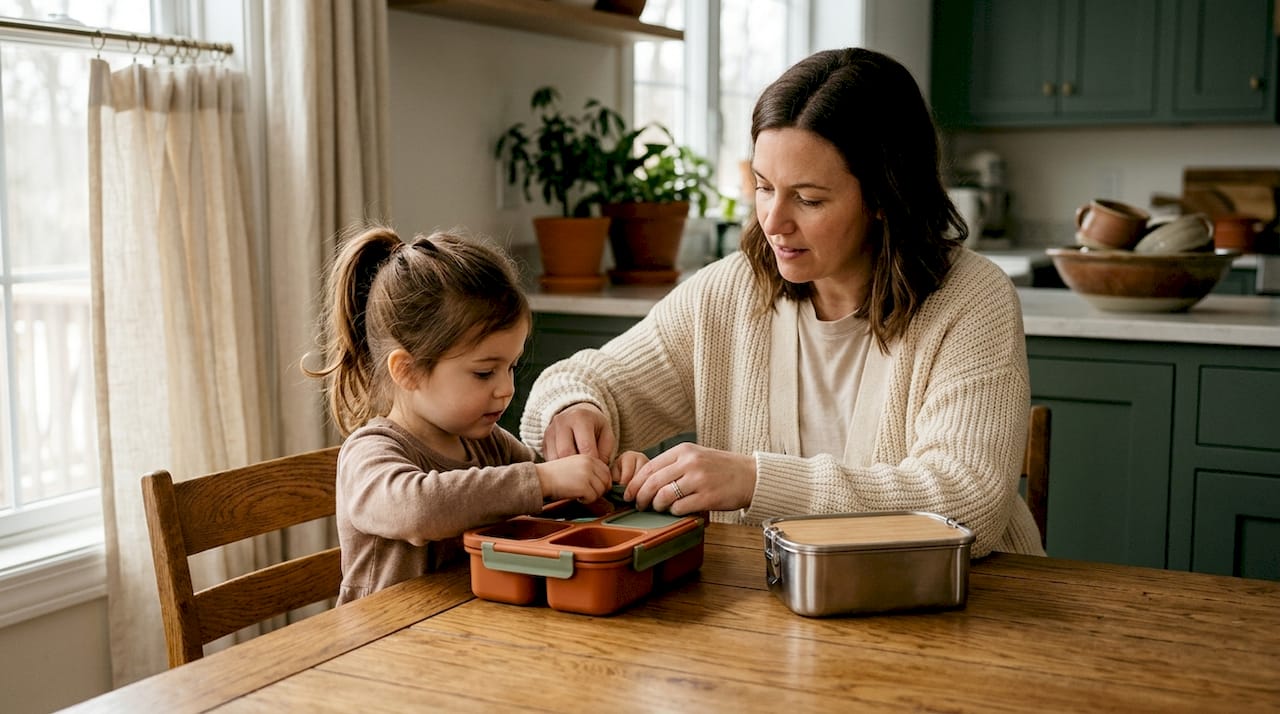
The market data tells a clear story: while stainless steel holds only 5 to 8% of the overall container market, its premium segment is growing steadily as health and eco concerns push buyers toward longer-lasting options. Premium stainless steel lunch systems carry warranties of up to five years, compared to plastic containers that most families replace within one to two years.
Key features of stainless steel and silicone containers:
- Bento-style stainless boxes: Multiple compartments in a single unit, popular for school lunches and portion-controlled adult meals.
- Insulated stainless containers: Double-wall construction keeps hot foods warm and cold foods chilled without ice packs.
- Silicone snack bags: Flexible, collapsible, and dishwasher safe. They compress flat when empty, saving drawer and bag space.
- Silicone stretch lids: Reusable covers that fit over bowls, plates, or containers of varying sizes.
Silicone is particularly appealing for parents of younger children because it is soft, lightweight, and nearly indestructible. Collapsible silicone containers fold down to almost nothing in a lunch bag, which matters when every inch of a child’s backpack counts.
6. Comparing types of reusable lunch containers
A side-by-side view clarifies the trade-offs quickly.
| Feature | Plastic | Glass | Stainless Steel | Silicone |
|---|---|---|---|---|
| Weight | Light | Heavy | Medium | Very light |
| Durability | Moderate | Moderate | Excellent | Excellent |
| Microwave safe | Most are | Yes (lid off) | No | Some |
| Dishwasher safe | Top rack only | Yes | Yes | Yes |
| Odor resistance | Low | Excellent | Excellent | Good |
| Eco-friendliness | Lower | High | High | High |
| Typical price range | $5 to $20 | $15 to $40 | $20 to $60 | $10 to $30 |
| Best for | Kids, dry foods | Adults, meal prep | School, work, portions | Snacks, travel |
The portion control container segment is growing at 8 to 10% annually, driven by fitness-aware consumers who want divided containers that make managing meal size intuitive rather than effortful. This trend is shaping new designs across all four materials.
7. Bento box options: a category worth understanding separately
Bento boxes deserve their own attention because they operate on a different logic than standard containers. The design philosophy centers on variety within a single unit, with compartments sized for proteins, grains, vegetables, and snacks all packed together. For children especially, this format encourages balanced eating without requiring multiple separate containers.
The nuance that many buyers miss: bento-style leak-proof claims typically apply to individual compartments, not to the entire box if it is turned on its side. Wet foods like fruit or sauces should be packed in the most secure compartments, or in small lidded cups nested within the bento tray. Understanding this distinction prevents frustrating spills and helps you pack smarter from day one.
Bento box options range from simple two-section plastic trays under ten dollars to premium stainless steel systems with silicone-sealed compartments. The best bento box for your family depends on how adventurous your packing style is and how much variety you want to offer at each meal.
8. Tips for choosing the best reusable lunch container for your family
Choosing well comes down to matching the container to how you actually live, not to an idealized version of lunch packing.
- Start with meal type. If you pack warm leftovers, prioritize microwave-safe glass or insulated stainless steel. For dry snacks and sandwiches, lightweight plastic or silicone works well.
- Think about who is carrying it. Child-friendly lunch containers should be lightweight, easy to open with small hands, and resistant to drops. Adults can handle heavier glass or steel options.
- Factor in your cleaning routine. If you rely on a dishwasher, confirm full dishwasher compatibility. Hand-washing every day is a commitment that wears thin quickly.
- Pair containers with insulated lunch bags. Many schools lack refrigeration, making insulated bags and ice packs a critical part of food safety, not just a nice addition.
- Set a realistic budget. A well-chosen stainless steel set at $40 outlasts three rounds of $12 plastic sets. The math often favors investing once.
Pro Tip: Try one container from a new material before buying a full set. A single glass container or stainless bento box lets you test real-world compatibility with your meals and routine before committing to a larger purchase.
My perspective on choosing reusable lunch containers
I’ve spent years watching families cycle through container after container, replacing cheap plastic sets every few months while assuming the problem was the brand rather than the material. What I’ve learned is that the real cost of a reusable lunch container is never just the purchase price. It’s the time spent cleaning stained plastic, the frustration of a warped lid that no longer seals, and the quiet environmental toll of discarding something that was supposed to be sustainable.
My honest take: glass and stainless steel are genuinely worth the upfront investment for adults, and silicone is underrated for children. The tactile contrast between a well-made stainless bento box and a flimsy plastic tray tells you everything before you even pack a meal. That said, I don’t think plastic is the villain it’s sometimes made out to be. A good BPA-free divided container for dry snacks is practical, affordable, and perfectly reasonable. The mistake is using it for everything, including acidic foods and daily reheating, where glass simply performs better.
What I encourage is a layered approach. Build a small collection of two or three container types that cover different meal situations rather than searching for one perfect solution. Experimentation is not indecision. It’s how you develop a system that actually holds up through busy school mornings and long workdays.
— RGDEnterprise
Simplify your lifestyle with the right essentials
Finding the right containers is one part of a larger commitment to intentional, organized living. At Rgdenterprise, the philosophy behind every product in the RGD Essentials Market is the same: quality items that genuinely simplify your daily routine, chosen with care for both function and longevity.
Whether you are building out a complete eco-friendly kitchen setup or looking for thoughtful additions to your home organization system, Rgdenterprise brings together products that hold their value over time. From food storage to personal care and beyond, every item is selected to meet real everyday needs with reliability and style. Browse the full collection and find the pieces that fit your family’s rhythm.
FAQ
What are the main types of reusable lunch containers?
The main types are plastic, glass, stainless steel, silicone, and bento-style boxes. Each material offers different strengths in weight, durability, and food safety.
Which reusable lunch container is best for kids?
Lightweight plastic or silicone containers with divided compartments and easy-open lids work best for children. Stainless steel bento boxes are also excellent for durability and portion variety.
Are glass lunch containers safe to microwave?
Yes, most glass lunch containers are microwave safe, but the lid must be removed first if it is plastic or has a rubber seal. Always check the manufacturer’s guidelines before reheating.
How long do reusable lunch containers last?
Stainless steel containers can last five or more years with proper care, while plastic containers typically need replacing within one to two years depending on use and cleaning habits.
Do bento boxes actually prevent leaks?
Bento box leak-proof features typically apply to individual compartments rather than the full box. Wet foods should be packed in the most secure sections or in small lidded cups to prevent spills during transport.
Recommended
- 12-Piece Stoneware Dinner Plates Bowls Sets | Microwave & Dishwasher S – RGD Essentials Market
- Universal Foldable 4 Chairs for Indoor & Outdoor Use - Stylish Multi-F – RGD Essentials Market
- Wooden Sandbox with Dinosaur Print Canopy Kids Sandbox Outdoor with Be – RGD Essentials Market
- Vintage glass storage jars with Cork Cap - Perfect for Tea. – RGD Essentials Market
0 comments