

Clutter has a way of accumulating quietly, until one day you open a closet and everything spills out. Many people invest in storage products only to watch them warp, crack, or collapse within a year. When you set out to pick durable home storage solutions, the difference between a system that holds up for a decade and one that fails in a season comes down to a few deliberate choices. This guide walks you through materials, planning, room-by-room selection, and maintenance so your storage works as hard as your household does.
Table of Contents
- Key takeaways
- How to pick durable home storage solutions: key materials and criteria
- Preparing well before you purchase
- Room-by-room guide to choosing the right storage
- Common mistakes that shorten storage lifespan
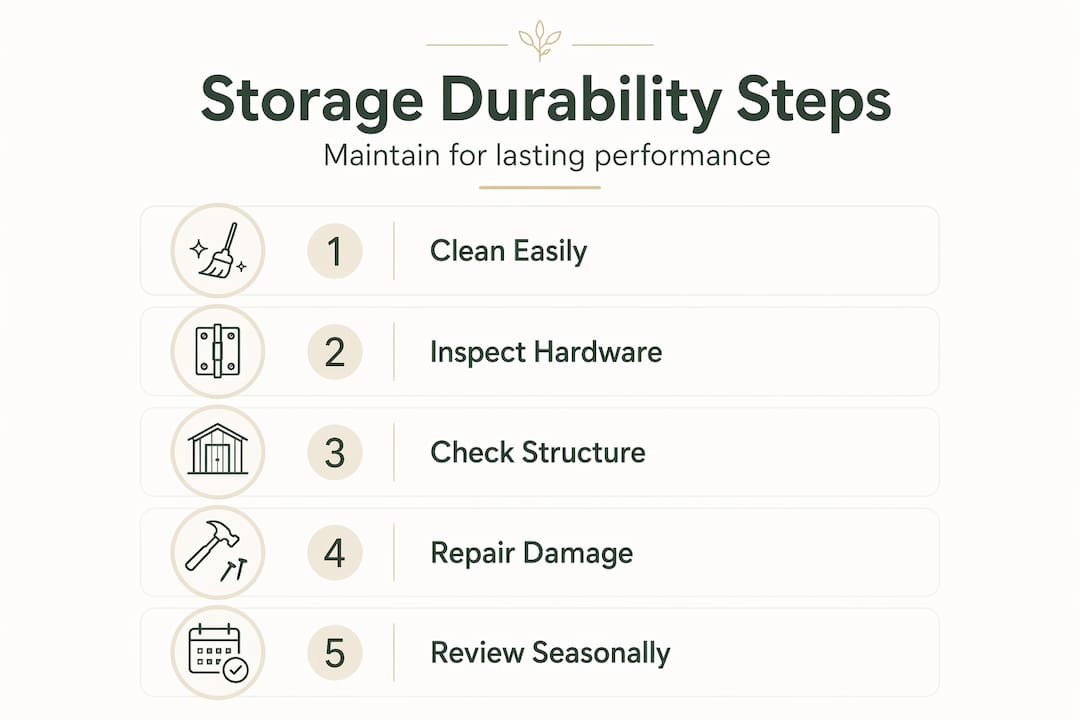
- Maintaining storage systems for long-term performance
- My honest take on storage that actually lasts
- Explore quality storage options from Rgdenterprise
- FAQ
Key takeaways
| Point | Details |
|---|---|
| Material determines lifespan | Choose high-density polyethylene, metal, or treated wood to avoid early wear and moisture damage. |
| Measure before you buy | Accurate space measurements prevent costly mismatches and wasted storage capacity. |
| Match storage to habits | Systems that fit how you actually live are the ones you will actually maintain long-term. |
| Closed storage reduces clutter | Storing 80% of items behind closed doors minimizes visual noise and cleaning frequency. |
| Routine maintenance extends life | Inspecting hardware and cleaning regularly keeps storage systems functional for years. |
How to pick durable home storage solutions: key materials and criteria
Not all storage products are created with the same care. The material a bin, shelf, or cabinet is made from tells you almost everything about how long it will last and how much abuse it can absorb.
Here are the material categories worth understanding before you spend a dollar:
- High-density polyethylene (HDPE) bins. This is the gold standard for plastic storage. HDPE resists cracking under heavy loads, repels moisture, and holds up in temperature-swinging spaces like garages and attics. Plastic containers resist moisture and pests far better than cardboard, making them the preferred choice for archival and long-term household storage.
- Metal shelving and racks. Powder-coated steel shelving is nearly indestructible in home environments. It holds heavy loads without bowing, and the coating resists rust when the surface stays intact.
- Treated or sealed wood. Raw plywood absorbs moisture and splinters over time. Sealed or laminated wood, however, performs well in bedroom and living room applications where you want warmth without sacrificing durability.
- Fabric storage bags. Tear-resistant moving bags with ergonomic handles offer a reusable, flexible option for seasonal items and closet storage, provided the stitching is reinforced at stress points.
Beyond material, pay attention to structural design. Stackability matters because bins that nest unevenly under weight will eventually crack or tip. Look for lids that lock rather than just rest on top, and check that shelving units have cross-bracing to prevent lateral sway.
Maintenance ease is another quiet durability factor. A storage system you cannot clean easily will accumulate grime, and in humid areas, that leads to mold. Smooth interior surfaces on bins and sealed wood finishes on shelves make upkeep simple enough that you will actually do it.
Pro Tip: Run your hand along the interior seams of any plastic bin before buying. Rough, uneven seams indicate lower-quality molding and are the first place cracks develop under load.
Preparing well before you purchase
Buying storage without measuring first is one of the most common and costly mistakes homeowners make. A thoughtful preparation phase turns a guessing game into a precise process.
- Measure every target space. Pull out a tape measure and record the height, width, and depth of each closet, cabinet opening, under-bed clearance, and garage wall section you plan to use. Note ceiling heights in basements and attics where vertical storage is possible.
- Categorize your belongings by access frequency. Divide items into three groups: active (used weekly), passive (used monthly or seasonally), and deep storage (rarely accessed). Active items need front-facing, easy-reach storage. Deep storage can go high, low, or behind other things.
- Consider multi-purpose furniture. Multipurpose furniture with built-in storage adapts as household needs change and outlasts single-use organizers because it serves more than one function. A storage ottoman, a bed frame with drawers, or a bench with a hinged lid all earn their floor space twice over.
- Set a realistic budget. Durable storage costs more upfront but less over time. A $15 flimsy bin replaced three times costs more than a $35 HDPE bin that lasts a decade. Think in total cost of ownership, not just sticker price.
- Account for renter constraints. If you rent, wall-mounted permanent installations may not be an option. Prioritize freestanding shelving, tension-rod organizers, and over-door systems that leave no trace when you move out.
Pro Tip: Photograph each space before shopping. Scrolling through those photos in a store prevents impulse purchases that do not fit your actual dimensions.
Room-by-room guide to choosing the right storage
Different rooms place different demands on storage systems. What works in a garage will overwhelm a bedroom, and what looks right in a living room will fall apart in a damp basement.
| Room | Best storage type | Key durability feature |
|---|---|---|
| Kitchen | Clear HDPE bins, magnetic metal racks | Moisture resistance, easy cleaning |
| Bedroom | Under-bed rolling platforms, closed cabinets | Sealed edges, locking casters |
| Garage or basement | Heavy-duty steel shelving, ceiling racks | Load rating, rust-resistant coating |
| Living room or entryway | Storage benches, wall hooks, built-ins | Structural joinery, weight capacity |
Here is how to apply this room by room:
- Kitchen. Clear bins let you see contents without opening every container, reducing the time food sits forgotten. A magnetic wall mount rack keeps frequently used tools and spices off the counter without permanent installation. Adjustable shelving inside pantry cabinets accommodates changing inventory and prevents the stacking instability that causes avalanches.
- Bedroom. Under-bed storage is one of the most underused spaces in any home. Custom rolling platforms built from 3/4-inch plywood on locking casters, sized 2 inches shorter than bed clearance, improve accessibility and hold up far longer than flimsy fabric bed skirt organizers. Sealing the plywood edges prevents splintering and moisture absorption.
- Garage and basement. Heavy-duty steel shelving with a load rating of at least 1,000 pounds per shelf is the baseline for garages. For pegboard tool storage, spacing the board 1/2 inch from the wall using washers improves hook leverage and significantly increases the weight each hook can hold without pulling free.
- Living room and entryway. These spaces benefit from storage that doubles as furniture. A storage bench near the front door handles shoes, bags, and seasonal accessories without looking like a storage unit. Built-in shelving, when you own the home, offers the most durable and space-efficient solution available.
A well-organized home also follows a useful ratio: 80% of items stored in closed storage reduces visual clutter and cleaning tasks, while 20% can live on open display for convenience and aesthetics.
Common mistakes that shorten storage lifespan
Even well-chosen storage systems fail when used carelessly. These are the patterns that consistently undermine longevity:
- Overfilling bins and shelves. Every storage product has a weight limit. Exceeding it bows shelves, cracks bin bases, and warps lids. Treat weight ratings as hard limits, not suggestions.
- Ignoring humidity. Fabric bins in damp basements grow mold. Unsealed wood in bathrooms swells and splits. Match material to the moisture level of the space, not just its size.
- Skipping wall anchoring. Heavy freestanding shelving units in garages and closets must be anchored to wall studs. An unanchored unit loaded with tools or boxes is a tipping hazard, and the fall damages both the unit and whatever it lands on.
- Letting clutter creep back in. Storage systems degrade in function when they are overfilled over time. A quarterly review of what is stored where prevents the slow accumulation that turns organized spaces back into chaotic ones.
“Complex stacking systems that require moving many items to access one are not durable in practice. Durability depends on storage systems matching how you actually live.” Organization solutions that work
The most durable storage system is one you use correctly and consistently. A technically superior product abandoned because it is inconvenient offers no real value.
Maintaining storage systems for long-term performance
Choosing well is only half the work. Keeping storage in good condition over years requires a light but consistent maintenance practice.
- Clean bins and shelves seasonally. Wipe down plastic bins with a mild soap solution and dry thoroughly before restocking. For metal shelving, check for rust spots at joints and treat them immediately with a rust-inhibiting spray before they spread.
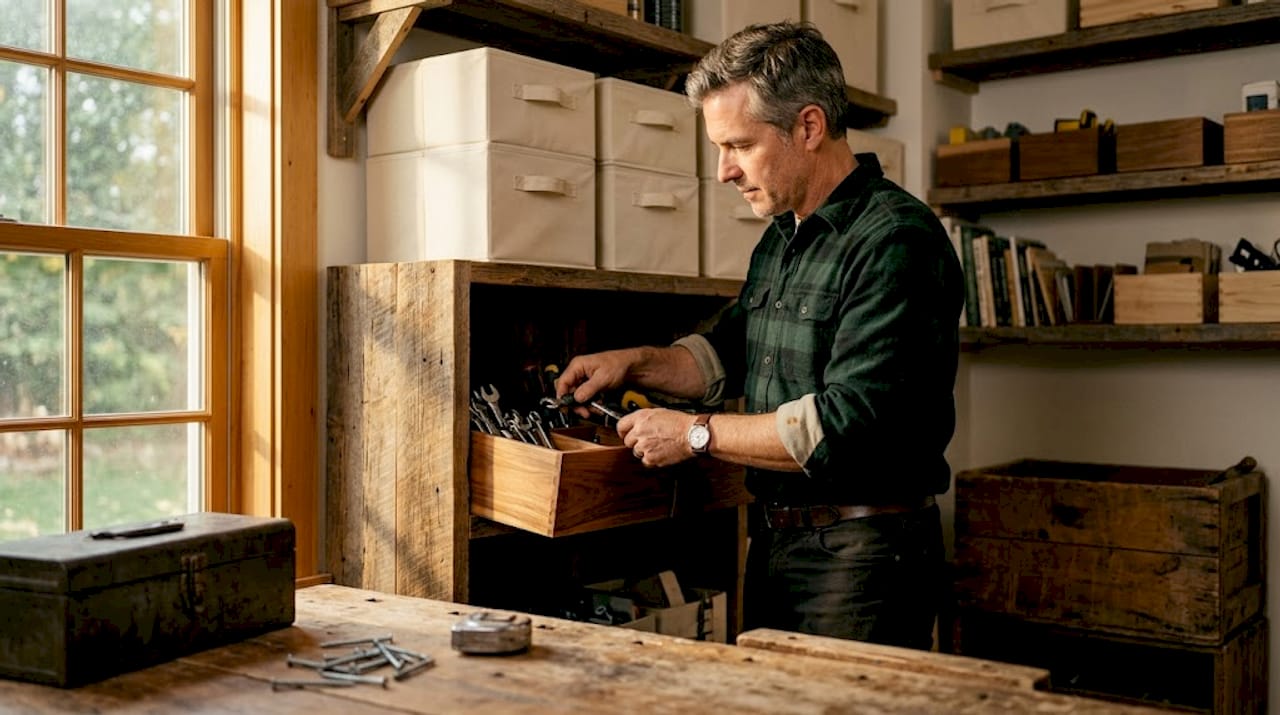
- Inspect hardware twice a year. Hinges on cabinet doors, casters on rolling platforms, and tension rods in closets all experience wear. A loose hinge ignored for months becomes a broken door. Tighten screws, replace worn casters, and re-tension rods during spring and fall reviews.
- Reinforce shelving under heavy loads. If a shelf shows any visible bow, add a center support bracket before it fails. Waiting until the shelf collapses means replacing both the shelf and everything stored on it.
- Rotate seasonal storage. Moving winter gear to accessible spots in fall and summer gear in spring prevents overpacking any single area and gives you a natural opportunity to inspect and clean.
- Know when to replace. Cracked plastic, rusted metal that has penetrated the coating, and warped wood are signs that a unit has reached the end of its useful life. Holding onto failing storage costs more in lost organization than replacing it does.
Pro Tip: Keep a small toolkit near your main storage areas: a screwdriver, a few spare screws, and touch-up paint for metal shelving. Repairs done the moment you notice a problem take two minutes instead of two hours.
My honest take on storage that actually lasts
I’ve seen beautifully organized homes fall apart within six months, and I’ve seen modest, unglamorous systems hold steady for years. The difference is almost never the product. It’s the fit between the system and the person using it.
In my experience, the storage solutions that truly last are the ones that require the least effort to maintain. If putting something away takes more than two steps, most people stop doing it. That’s not a character flaw. It’s just how daily life works under pressure.
What I’ve learned from working through real home organization challenges is that systems matching daily habits outlast systems built around aspirational habits. Buy storage for who you are, not who you plan to become.
I’ve also found that multi-function pieces carry their weight in ways single-purpose organizers never do. A desk with drawers, a bench with a lid, a jar that looks good on the counter and seals tightly enough to keep coffee fresh for months. These pieces earn their place because they serve more than one need, and that flexibility means they stay in use as your household evolves.
The styling mistake I see most often is prioritizing appearance over access. Open shelving looks clean in photos but collects dust and requires constant tidying. Closed storage with clear labeling is less photogenic and far more livable.
— RGDEnterprise
Explore quality storage options from Rgdenterprise
At Rgdenterprise, every product is selected with the same criteria this guide describes: durability, function, and the kind of design that holds up to real daily use.

For kitchen and pantry organization, the glass storage jars with cork caps offer an airtight, long-lasting solution that keeps dry goods fresh and looks intentional on any counter. The magnetic kitchen organizer rack mounts without permanent installation and handles daily use without loosening. For home office spaces that need both workspace and storage, the sit-stand rolling desk combines flexibility with a storage-friendly footprint. Browse the full range at Rgdenterprise to find pieces that fit your space and your habits.
FAQ
What materials last longest in home storage?
High-density polyethylene, powder-coated steel, and sealed wood offer the best longevity. Plastic bins resist moisture and pests, making them ideal for long-term household storage.
How do I choose storage containers for small spaces?
Measure your available space precisely, then prioritize stackable, clear bins and multi-purpose furniture with built-in storage to maximize every square foot without overcrowding.
How much should I expect to spend on durable storage?
Durable storage costs more upfront but delivers better value over time. A quality HDPE bin or steel shelf unit typically pays for itself within two years compared to cheaper alternatives that need replacing.
How often should I maintain my storage systems?
A seasonal review twice a year covers most maintenance needs. Inspect hardware, clean surfaces, and check for structural wear each spring and fall to catch problems before they become failures.
Can renters install durable storage without damaging walls?
Yes. Freestanding steel shelving, over-door organizers, tension rod systems, and furniture with built-in storage all provide reliable, long-lasting storage options without requiring permanent wall modifications.
Recommended
- Ergonomic computer desk, white L-Shaped Corner Computer Desk – RGD Essentials Market
- Versatile White Desk with Hutch and Bookshelf – Equipped with Charging – RGD Essentials Market
- Home office desk with modesty panel and detached file cabinet on locki – RGD Essentials Market
- Premium Wicker Office Chair Mat - 30" x 48" Durable Carpet Protector f – RGD Essentials Market
0 comments